Product Description
Stainless Steel The CHINAMFG Conveyor Mesh Belt
Great Wall mesh belt is a kind of friction driven machinery for continuous
Transportation of materials. The application of CHINAMFG mesh belt can form a material conveying process on a certain conveying line from the initial feeding point to the final discharging point.
Great Wall mesh belt can not only transport the whole materials, but also transport the part of the products.
The CHINAMFG mesh belt is widely used in various modern industrial enterprises, and it is an indispensable and important accessory in the automation device and modern automation assembly line of various industries.
Great Wall network belt is also known as horseshoe chain, plate mesh belt, metal sheet type net belt and drag belt;
Features: the net belt is composed of flat metal sheet and round metal wire, with light weight, large gap , flat mesh surface, stable operation and no deviation.
Application:It can be used for washing, drying, cooling and heat treatment.
Features and Advantages:
1.Smooth surface,high toughness strong corrosion resistance,tensile strength,good permeability,not easy to deformation,durability and other special functions.
2.Wire diameter is available as customer’s advice.
3. Has resistance to acid,alkali and low and high tempurature.
4.Has good conveying function,break resistance,as well as antioxidation.
5. It is very easy to install and steadily run without deflection.
Spiral Belt Specifications:
| Item Name | Stainless Steel The CHINAMFG Conveyor Mesh Belt |
| rod pitch(mm) | 25.4 / 27.4 / 30 / 31.75 / 38.1 |
| wire diameter(mm) | 1.0 1.2 1.4 1.5 1.6 1.8 2.0 |
| cross rod diameter(mm) | 6 / 8 / 10 / 12 |
| spiral pitch | customized |
| overallwidth | customized |
| Material | all parts rods, mesh, links in food grade stainless steel 304 / 316 |
| application | washing, drying, cooling and heat treatment. |
Product display:
Production Process:
other products:
Company Introduction:
Xihu (West Lake) Dis. Industrial Co., Ltd. was established in 1998.It is a set of independent research and development, production, processing, sales as 1 of the automation equipment and machinery manufacturers.
If you order from us, we are sure that you will be greatly satisfied with our products and the most competitive price.We are mainly majored in Conveyor Equipments for nearly 20 years so you can be relieved for our products. We are very looking CHINAMFG to receive your any enquiries or orders.
FAQ:
Q1:Are you a trading company or factory?
A: Xihu (West Lake) Dis. Xihu (West Lake) Dis. Industrial Co., Ltd. has factories located in ZheJiang China, We supply high quality equipment with factory price, and owns export and import rights.
Q2:What product do you manufacture?
A:Xihu (West Lake) Dis. Xihu (West Lake) Dis. Industrial Co., Ltd. is a professional manufacturer of food machinery, glass machinery, mesh belt, mesh chain, chain, chain plate, conveyor and other mechanical equipment.
Q3:What is the payment term?
A:We accept T/T, W/U, L/C, DP and so on.
Q5: What is the delivery time?
A: It takes about 5~15 days usually after receipt of your deposit.
| Type: | Stainless Steel Mesh Belt |
|---|---|
| Material: | Metal |
| Inside Material: | Metal |
| Feature: | Oil-Resistant, Acid And Alkali Resistant, Tear-Resistant, Heat-Resistant, Cold-Resistant, Wear-Resistant |
| Tensile Strength: | Strong |
| Width: | Customized |
| Samples: | US$ 1/Meter 1 Meter(Min.Order) | |
|---|
| Customization: | Available | Customized Request |
|---|
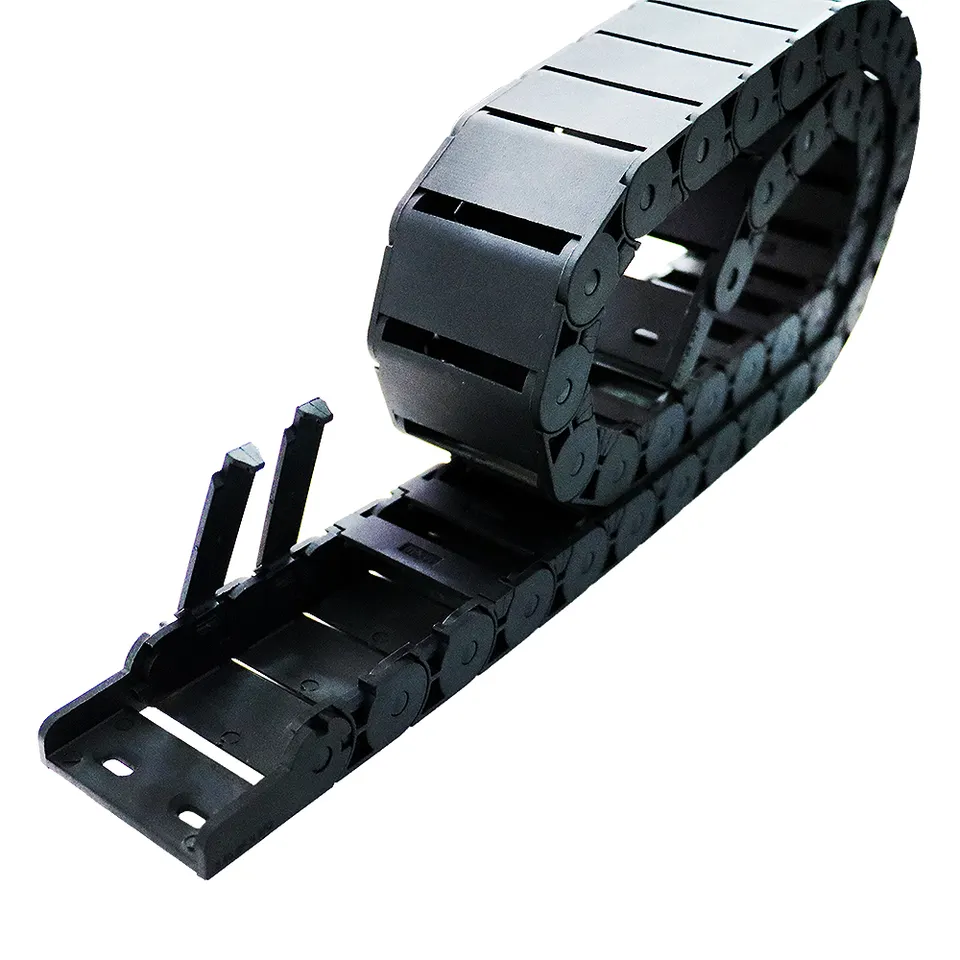
How do drag chains handle side loads and lateral forces?
Drag chains are designed to handle various mechanical forces, including side loads and lateral forces. These forces can occur during the movement of cables and hoses within the drag chain, especially in applications where the drag chain travels along curved or complex paths. Drag chains employ specific design features to effectively manage side loads and lateral forces:
- Rugged Construction: Drag chains are typically constructed from robust and durable materials, such as high-strength plastics or metal alloys. This construction provides the necessary strength and rigidity to withstand side loads and lateral forces without deformation.
- Link Design: The links or segments of the drag chain are often shaped and interconnected to allow for flexible movement while maintaining stability. The design prevents binding or jamming when the chain bends or changes direction.
- Bumper Stops: Many drag chains incorporate bumper stops or dividers within the chain’s interior. These stops help to guide and separate the cables and hoses, preventing them from coming into contact with each other and minimizing the risk of entanglement and wear.
- Tension Management: Proper tension management is essential to ensure smooth movement of the cables and hoses within the drag chain. Tensioning devices or systems can be used to maintain the appropriate level of tension, preventing excessive sagging or bunching that could lead to interference or damage.
- Side Mounting Brackets: In some applications, side mounting brackets can be used to provide additional support to the drag chain, reducing the effects of side loads and lateral forces.
It is crucial to select the appropriate type and size of drag chain for the specific application to ensure it can handle the expected side loads and lateral forces. Regular maintenance, inspection, and lubrication are also essential to prolong the drag chain’s life and optimize its performance in managing mechanical forces during operation.
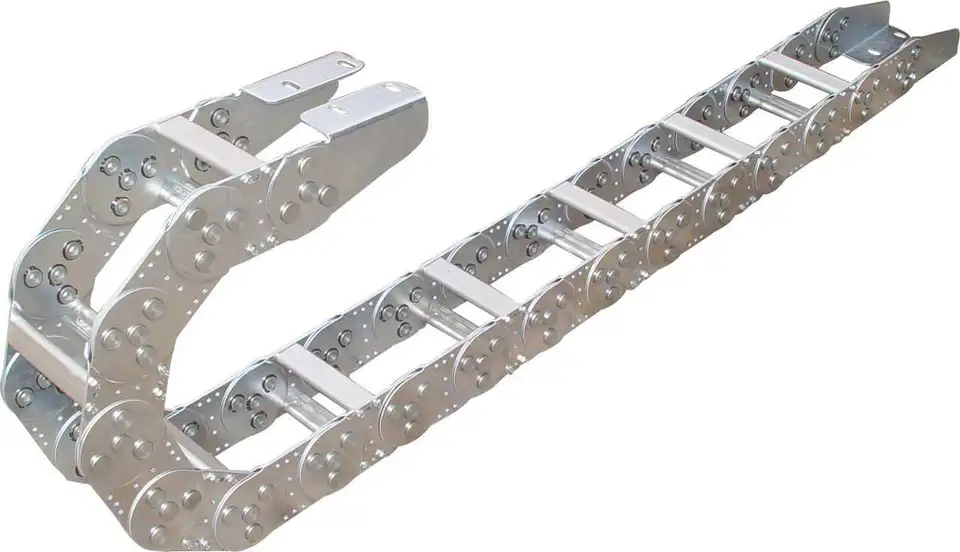
Can drag chains be used in the energy and power generation sector?
Yes, drag chains are commonly used in the energy and power generation sector for cable management and protection. The energy and power generation industry includes power plants, renewable energy facilities, electrical substations, and other related applications. Here’s how drag chains are utilized in this sector:
- Cable Protection: The energy and power generation sector often involves a complex network of cables and hoses that carry electricity, signals, and fluids. Drag chains are used to protect these cables from damage caused by continuous motion, abrasion, and exposure to external elements.
- Dynamic Applications: In power generation facilities, various equipment such as turbines, generators, and transformers require dynamic cable management due to continuous movement. Drag chains can handle these dynamic applications, ensuring that cables and hoses remain organized and safely routed during equipment operation.
- Harsh Environments: Power plants and substations may expose cables to harsh environments, including extreme temperatures, chemicals, and outdoor conditions. Drag chains made from durable and corrosion-resistant materials can withstand these challenges, providing reliable cable protection and management.
- High Loads: Drag chains are capable of supporting multiple cables and hoses, even in applications with high loads and complex cable configurations. They prevent cables from tangling, getting caught, or suffering excessive stress during equipment operation.
- Long Travel Distances: In some power generation facilities, cables may need to travel long distances to connect different components and systems. Drag chains facilitate smooth movement over these long travel distances, ensuring that cables are managed efficiently and without interference.
- Enhanced Safety: Cable management is critical in the power generation sector to maintain a safe working environment. Drag chains keep cables organized, reducing the risk of accidents caused by cable entanglement or tripping hazards.
- Reliability and Longevity: Drag chains are designed for long service life and reliable performance, minimizing downtime and maintenance requirements. This is especially important in critical power generation applications where uninterrupted operation is essential.
Overall, drag chains play a crucial role in the energy and power generation sector by providing efficient cable management and protection. Their ability to handle continuous flexing, harsh environments, and dynamic applications makes them a valuable solution for ensuring the reliability and safety of cable systems in this industry.

How does a drag chain differ from other cable carriers or cable organizers?
A drag chain, also known as a cable carrier or cable chain, is one of several types of cable carriers or cable organizers used in industrial applications. While they share the common goal of managing and protecting cables and hoses, there are distinct differences between drag chains and other cable carriers:
1. Design and Construction: Drag chains are designed as a flexible chain-like structure with interconnected links or compartments. The links allow the chain to bend and move freely, accommodating various machine movements. On the other hand, other cable carriers may come in different designs, such as enclosed tubes, open trays, or spiral wrap-around designs.
2. Application: Drag chains are specifically used in applications where frequent movement and flexibility of cables are required. They are commonly used in automated machinery, robotic arms, and equipment with dynamic motion. Other cable carriers may be more suitable for stationary or low-movement applications, depending on their design and features.
3. Flexibility: Drag chains are highly flexible and allow for multi-axis movement, making them suitable for complex motion systems. Other cable carriers may have limited flexibility and are better suited for linear or single-axis movements.
4. Load Capacity: Drag chains are designed to handle heavy loads, making them suitable for applications with numerous cables or large-diameter hoses. Other cable carriers may have different load capacities, and their suitability depends on the specific load requirements of the application.
5. Installation: Drag chains are typically installed using brackets or mounting accessories, and they are attached to the machine or equipment’s moving parts. Other cable carriers may have different installation methods, such as mounting on walls or floors.
6. Materials: Drag chains are commonly made from materials like plastic or metal, which offer good durability and resistance to wear. Other cable carriers may be made from different materials like nylon, steel, or even fabric, depending on the application’s requirements.
Despite these differences, the primary purpose of both drag chains and other cable carriers is to protect and guide cables, ensuring safe and efficient cable management in various industrial settings.


editor by CX 2023-11-01