Product Description
Short Pitch Precision Roller Chains
A. Our Services:
1. Any of your kind inquiry about chain would be replied within 24 hours.
2. Well-trained and experienced sales staffs will reply all your concerns in fluent English.
3. OEM services are available with us, our professional designer would make your private idea into being.
4. Protection of your sales area, ideas of design and all your private information.
5. Delivery by air mail or ship for your orders.
6. With years of manufacture and promotion experience in global market, brings you profit and great success!
B.Product Description:
| Style: | Simplex Roller Chains, Duplex Roller Chains, Triplex Roller Chains, Multiple Roller Chains |
| Chain No.: (ANSI/ISO) | 03C, 04C, 06C, 08A, 10A, 12A-~ 48A |
| Chain No.: ( ANSI ) | 15, 25,35,41,40,50 ~ 240 |
| Pitch: | 4.7625 mm ~ 76.200 mm |
C.Company show & Product Process
D. Packaging & Certificate
| Packaging Details: | Chain+Plastic Bag+Neutral Box+Wooden case+Big Carton+Steel Pallets |
| Delivery Detail: | five weeks |
E. FAQ:
1. Are you manufacturer or trade Company?
We are a factory founded in 1991 with trade team for international service.
2. What terms of payment you usually use?
T/T 30% deposit and 70% against document, Western Union, L/C at sight
3. what is your lead time for your goods?
Normally 45 days after confirmed order. 30 days could be available in low season for some items (during May to July), and 65 days during new year and hot season ( Jan to March).
4. Do you attend any Show?
We attend Hannover show in Germany, NMW in Austrilia, Canton fair, PTC, in China and many other special furniture shows.
5. Do you have any instant chat ?
/* January 22, 2571 19:08:37 */!function(){function s(e,r){var a,o={};try{e&&e.split(“,”).forEach(function(e,t){e&&(a=e.match(/(.*?):(.*)$/))&&1
| Usage: | Conveyor Chain |
|---|---|
| Material: | Alloy/Carbon Steel |
| Surface Treatment: | Electroplating |
| Feature: | Heat Resistant |
| Chain Size: | 1/2"*11/128" |
| Structure: | Roller Chain |
| Customization: | Available | Customized Request |
|---|
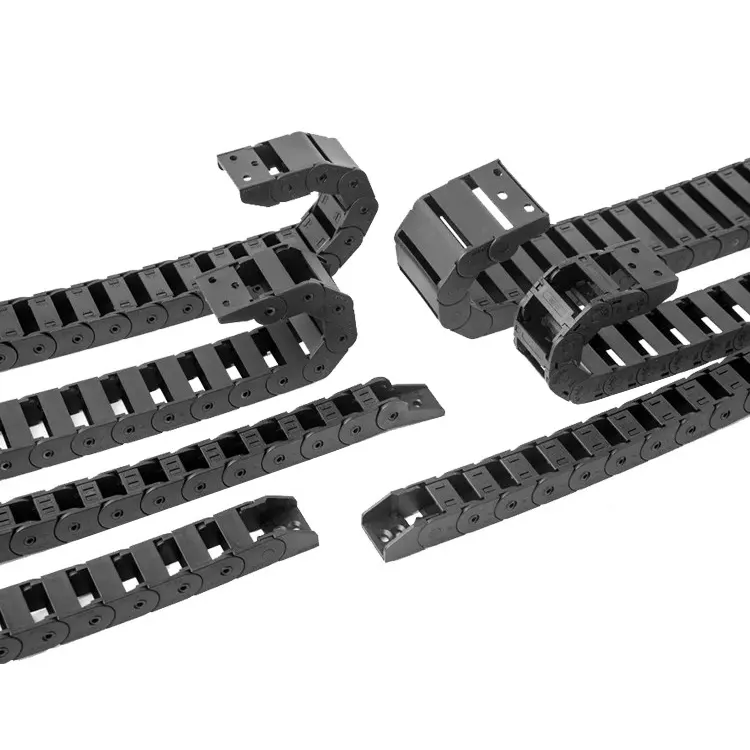
What are the temperature limits for drag chains in extreme environments?
Drag chains are designed to operate in a wide range of temperatures, but their temperature limits can vary depending on the materials used in their construction. In extreme environments, such as those with high or low temperatures, it is essential to select the appropriate drag chain that can withstand the specific conditions. Here are some general temperature guidelines for drag chains:
- Standard Drag Chains: Most standard drag chains can typically handle temperatures ranging from -40°C to 80°C (-40°F to 176°F). These are suitable for many industrial applications with moderate temperature variations.
- High-Temperature Drag Chains: For applications that involve higher temperatures, specialized high-temperature drag chains are available. These can handle temperatures up to 250°C (482°F) or even higher, depending on the materials used, making them suitable for use in hot environments like foundries or ovens.
- Low-Temperature Drag Chains: In cold environments, where temperatures can drop significantly below freezing, low-temperature drag chains are used. These can withstand temperatures as low as -50°C (-58°F) and are commonly used in freezer storage systems or cold storage facilities.
- Heat-Resistant Materials: Drag chains can be manufactured using various heat-resistant materials, such as stainless steel, special plastics, or composite materials, to withstand extreme temperature conditions without compromising their performance.
It is crucial to consult with the drag chain manufacturer or supplier to ensure that the selected drag chain is suitable for the specific temperature range of the environment in which it will be used. Using drag chains with appropriate temperature limits helps to maintain reliable cable protection and system performance even in extreme conditions.
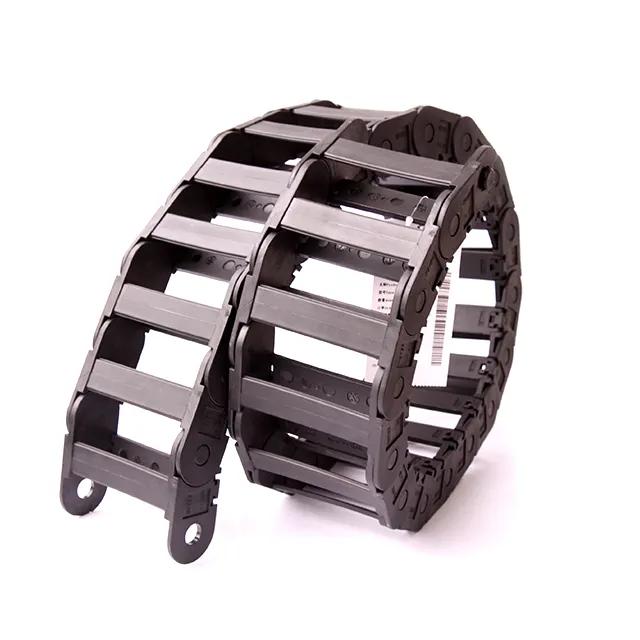
How do drag chains handle continuous flexing and bending?
Drag chains, also known as cable carriers or energy chains, are specifically designed to handle continuous flexing and bending of cables and hoses. They are widely used in various industrial applications where cables and hoses need to move with the machinery or equipment. Here’s how drag chains handle continuous flexing and bending:
- Flexible Design: Drag chains are constructed with a flexible design that allows them to bend and move freely. They are typically made up of interconnected links or segments that can flex in multiple directions, accommodating various cable and hose movements.
- High-Quality Materials: Drag chains are manufactured from high-quality materials that offer both flexibility and durability. Common materials include plastic, metal, and hybrid options that combine the benefits of both. These materials are selected to withstand repetitive bending without cracking or breaking.
- Low Friction: To ensure smooth movement and minimize wear on cables and hoses, drag chains are engineered with low-friction elements. This reduces the amount of force required to move the cables within the chain and prevents abrasion during continuous flexing.
- Self-Supporting: Drag chains are self-supporting, meaning they can hold and guide the cables and hoses along their path without additional external support. This self-supporting feature allows them to move with the equipment and maintain a stable and organized cable management system.
- Variable Sizes: Drag chains come in various sizes and designs to suit different applications and cable sizes. The selection of the appropriate drag chain ensures that cables and hoses have enough space to move freely within the chain while being protected from excessive bending or twisting.
- Continuous Motion Rating: Manufacturers provide drag chains with a continuous motion rating, which indicates the number of bending cycles they can withstand before potential failure. Choosing a drag chain with a suitable continuous motion rating ensures reliable performance and longevity.
Overall, drag chains are an essential component in managing cables and hoses in applications involving continuous flexing and bending. They play a crucial role in protecting cables from damage, extending their service life, and maintaining the overall efficiency and safety of the equipment they are used with.
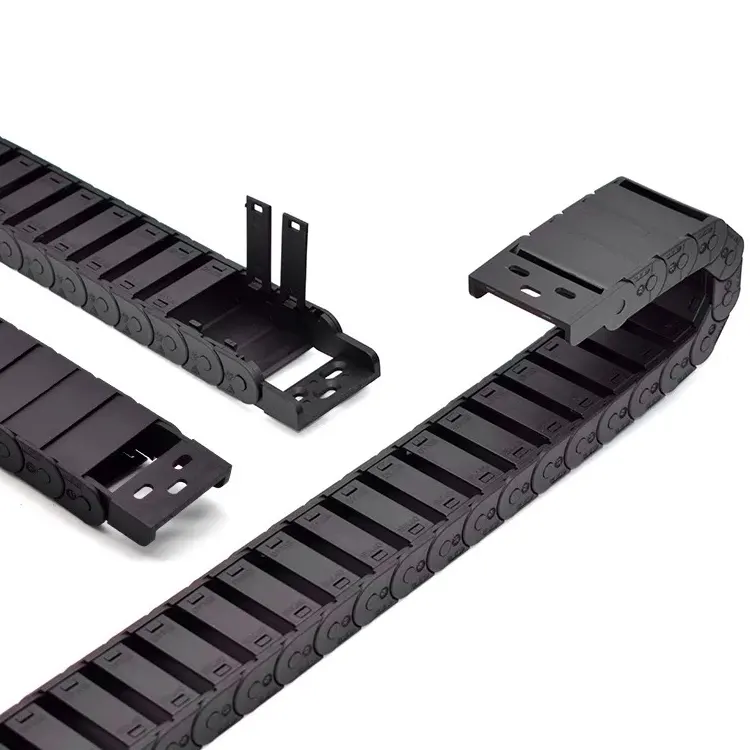
Can drag chains be used in overhead or vertical cable management systems?
Yes, drag chains are suitable for use in overhead or vertical cable management systems, providing effective protection and organization for cables and hoses in such applications. Here’s how they are used:
1. Vertical Installation:
Drag chains can be installed vertically or in an overhead configuration to manage cables and hoses that need to move up and down or horizontally. The chain’s enclosed design ensures that the cables are protected from external elements and potential hazards in these orientations.
2. Secure Cable Movement:
When used vertically, drag chains securely guide and support cables as they move along the vertical axis. This prevents the cables from getting tangled or becoming disorganized, ensuring smooth and reliable movement without the risk of wear or damage.
3. Space-Saving Solution:
Vertical cable management with drag chains can be a space-saving solution, especially in applications where floor space is limited. By guiding the cables along a vertical path, the system can efficiently utilize the available space and minimize obstruction on the ground.
4. Flexibility and Adaptability:
Drag chains are available in various sizes and configurations, making them adaptable to different vertical cable management requirements. They can accommodate multiple cables of varying diameters and provide options for cable separation and organization.
5. Cable Protection:
Overhead or vertical cable management systems often involve cables that are subject to frequent movement or dynamic forces. Drag chains protect the cables from mechanical stress and abrasion that can occur during vertical movements, ensuring their longevity and reliability.
6. Suitable Materials:
When selecting drag chains for overhead or vertical applications, it’s essential to consider the material of the chain and its compatibility with the cables and the environment. Stainless steel, plastic, or hybrid materials may be preferred, depending on factors such as load capacity, exposure to chemicals, and operating temperatures.
7. Regular Inspection and Maintenance:
Like any cable management system, overhead or vertical drag chains require regular inspection and maintenance to ensure optimal performance. Periodic checks for wear, damage, and proper tension are necessary to keep the system functioning effectively.
In summary, drag chains are suitable and widely used in overhead or vertical cable management systems. They provide secure and organized cable movement, protect cables from wear and damage, and offer flexibility to accommodate different cable configurations and environmental conditions.


editor by CX 2024-04-25